
Two lives. One past.
A hundred years apart.
A story that refuses to stay buried.
Berlin, 2022. Artur, a 19-year-old refugee, is trapped between worlds, haunted by memories of fleeing the Syrian civil war.
When someone from his journey reappears, their joyful reunion unravels into a powerful reckoning with identity, belonging and the cost of silence.
Spanning the deserts of 1915 to the turbulence of today, Bones in the Desert confronts the long shadows of war, racism in contemporary Europe and the struggle for freedom.
Written by British-Armenian playwright Joe Nerssessian, this powerful new play speaks directly to young adult audiences with heart, humour and an unflinching gaze. It’s about where we come from, who we carry with us and what it means to belong.
Written for audiences aged 13+ and adults, the play explores the legacy of the Armenian genocide, displacement and inherited trauma through the stories of two young men separated by a century.
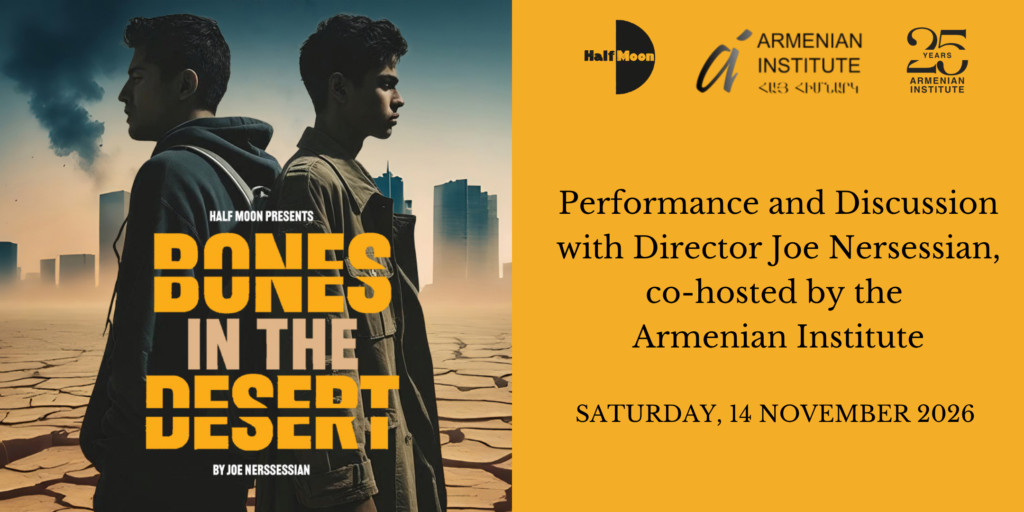
The production tours 12 venues across England from 12 November to 2 December 2026.
Bones in the Desert came out of Half Moon’s Narratives of Empathy and Resilience art form development programme in 2021, to create stories that reflect our diverse community, as well as support under-represented artists in developing their practice. During that programme, Joe Nerssessian created a piece that became the jumping-off point for him to explore the Armenian genocide and Armenian identity. It developed into a work about two young men, Bones in the Desert, which opened at the Half Moon Theatre in November 2026 before a UK tour.
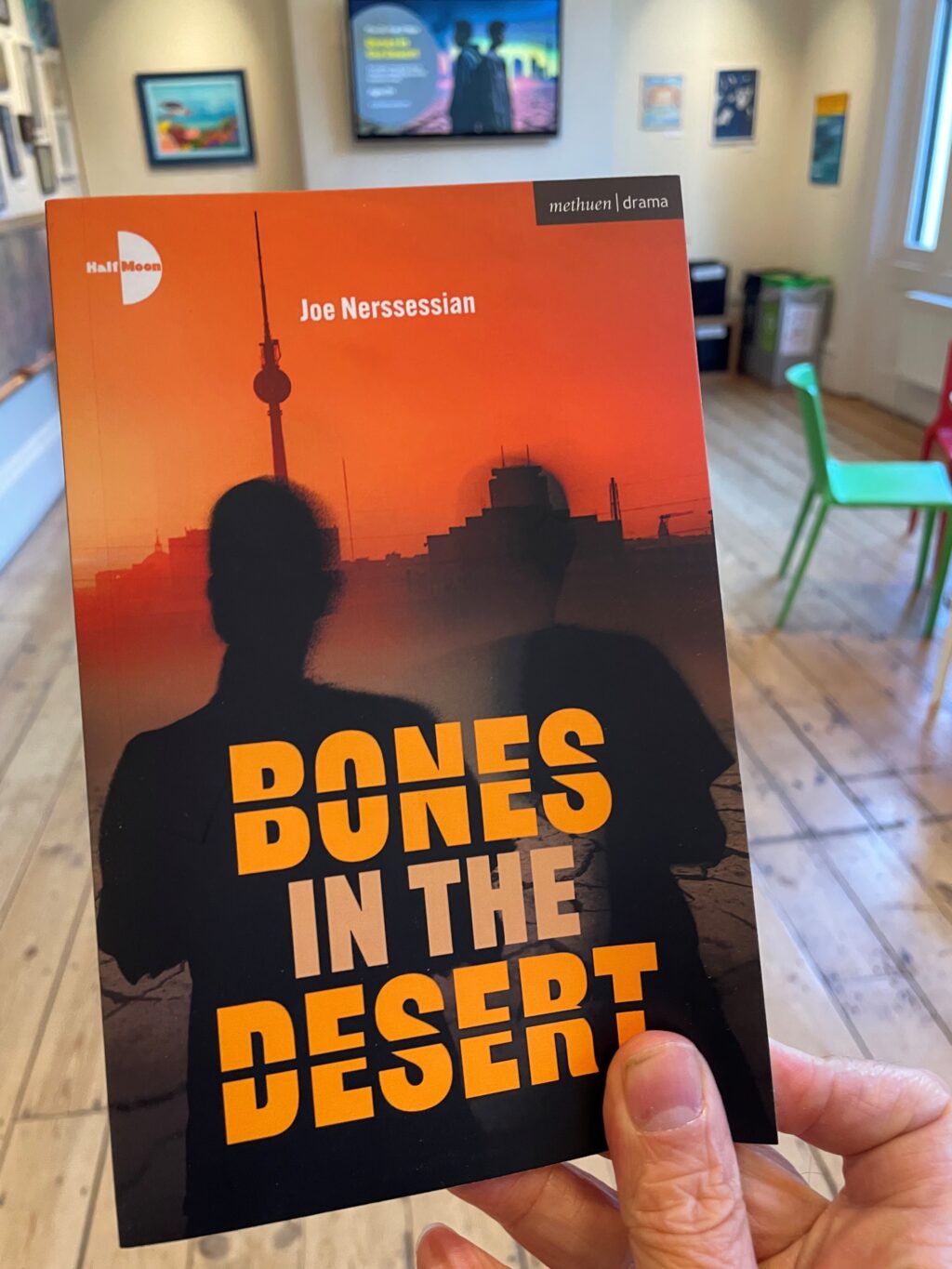
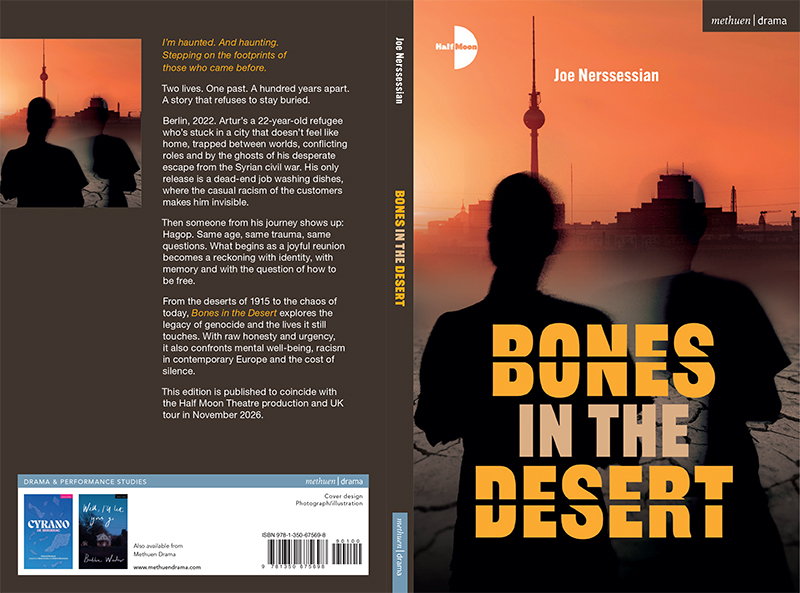
A copy of the playtext is available to buy from Half Moon.
Bones in the Desert is supported by The Benlian Trust.
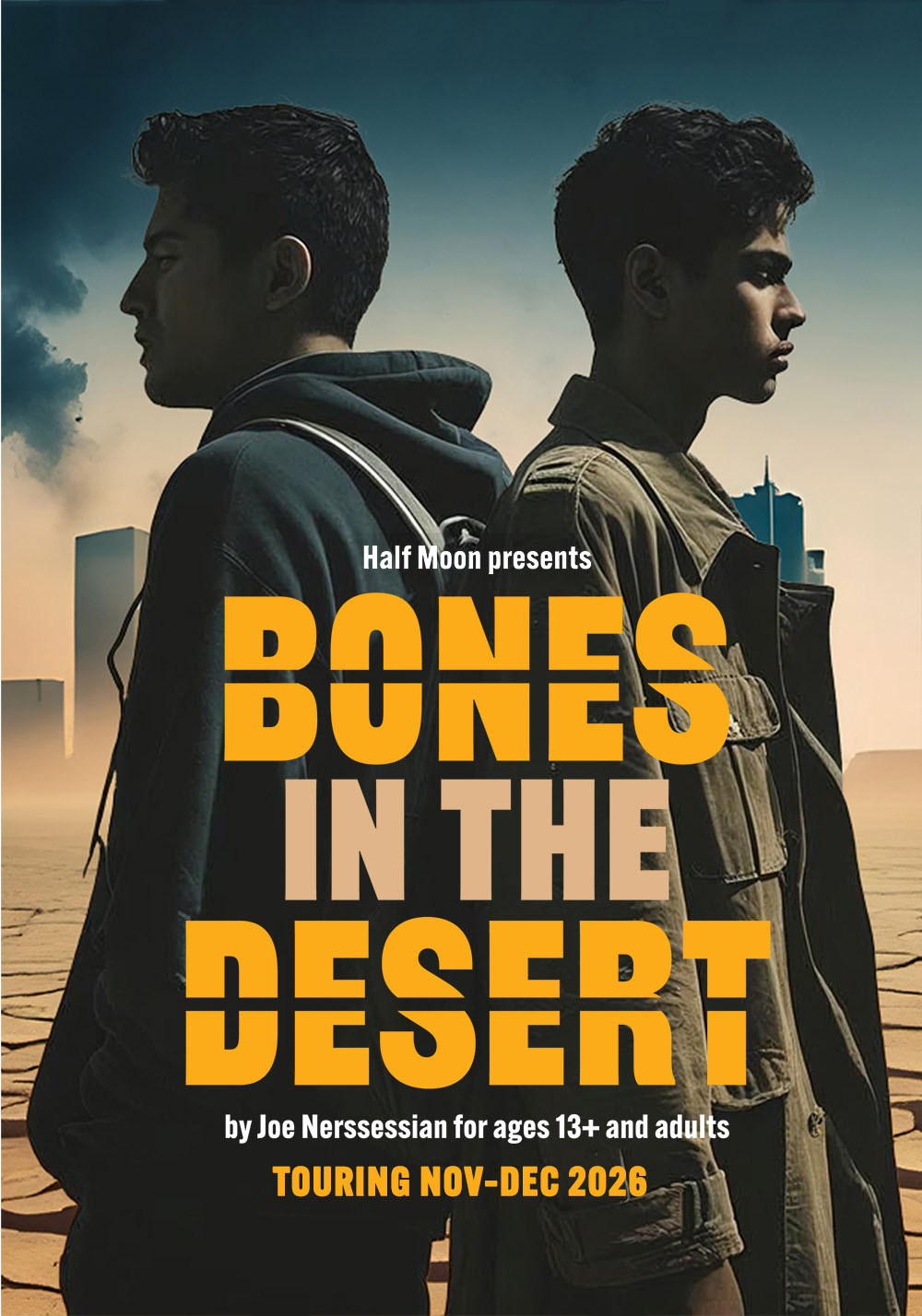
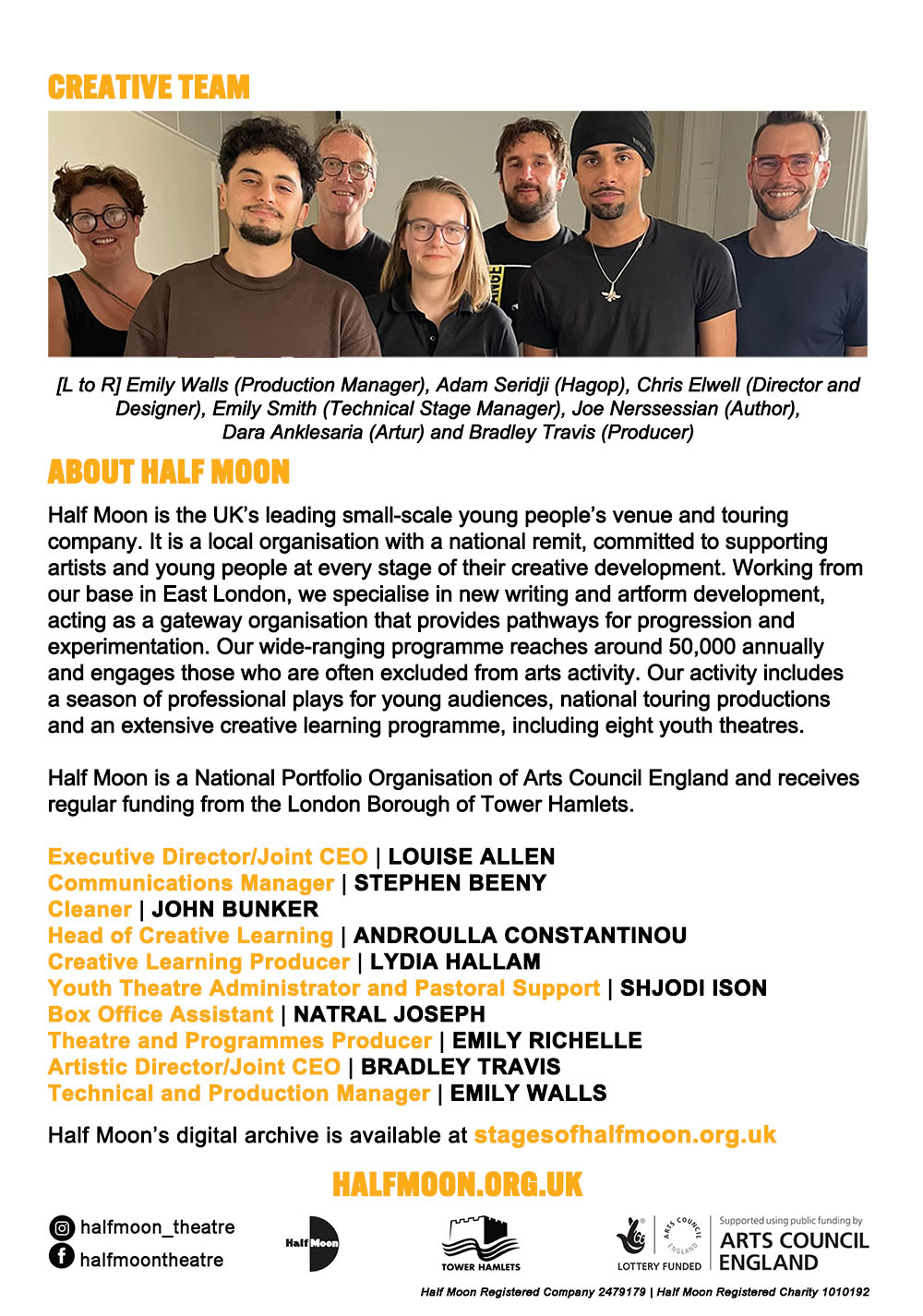




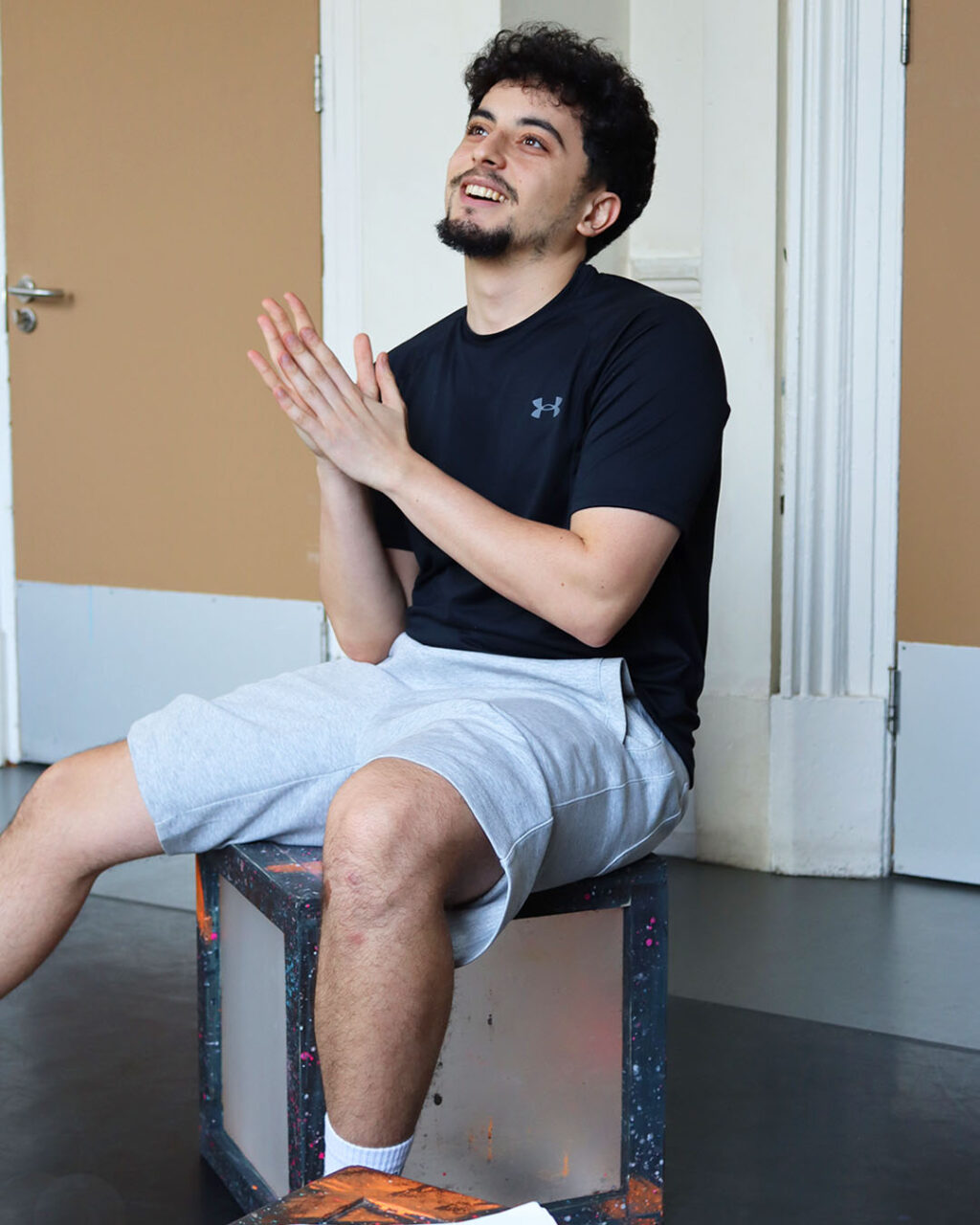


Tell me more about Bones in the Desert, what is the play about?
It’s about the impact of inherited trauma, war, displacement, racism on a young man. And I guess, how history, in some ways, goes on repeating itself.
What was the inspiration for the show?
The experience of my grandfather and the millions of other Armenians who were either killed or fled the Ottoman Empire during the genocide.
There are numerous accounts of bones and photographs still being found in the deserts, or in places where the death marches took place from 1915 onwards. So it was an attempt to think about that, as well as explore the inherited trauma on the descendants of survivors more than 100 years on.
But, more than that, it was also looking at the mirroring of the Armenians’ experience when Syrians were forced to flee in the opposite direction and towards Turkey due to the Civil War.
Many Armenians settled in Syria after the genocide and their descendants were therefore also caught up in the Civil War / forced to flee ISIS.
It’s the story of Armenians again and again. Unsettled, displaced, forced again to build a new Armenia. That idea comes from a quote by the writer William Saroyan, who said: “Go ahead, destroy Armenia. See … if you can do it. Send them into the desert without bread or water. Burn their homes and churches. Then see if they will not laugh, sing and pray again. For when two of them meet anywhere in the world, see if they will not create a New Armenia.”
It’s a quote which is often used by Armenians and so any reading it will certainly be familiar. But I think it still resonates.
What were you trying to achieve with the play?
I became curious about epigenetics and inherited trauma and I wanted to follow that line with the idea of the mirrored experience of Armenians in 1915 and Syrians in 2015 in the Syrian desert.
Can you tell us anything more about the characters?
I hope people can empathise with Artur, who is having a really difficult time in Berlin where he has ended up.
How did the piece come to fruition?
Really, all thanks to the amazing Half Moon Theatre. They ran a programme in 2021 which I joined and ended up developing a short piece alongside an amazing team of creatives. That piece was a jumping off point for me to talk about the genocide and Armenian identity and it developed into a piece about two young boys.
I have received such support from Half Moon who’ve trusted and backed me to write my first play which I hope speaks to both young people and a wider audience.
Why do the issues in Bones in the Desert particularly resonate with you?
I never met my grandfather who died in the 1980s, before I was born. He survived the genocide as a young boy and didn’t share much with my own father about his experiences. I know that he had 11 brothers and sisters, and just he and one sister survived.
He was in orphanages in both Greece and Syria before settling in Palestine. He also apparently used to bathe in springs to avoid disease during his youth.
I guess the issues which resonate are the aforementioned idea of creating a new Armenia, of identity.
I grew up in the UK and had very little awareness of Armenian identity, food, culture or language. My only really understanding of Armenian history was of the genocide.
And then it was only when I decided to start visiting Armenian community centres and meeting members of the diaspora that it started to unravel itself to me. I then lived in Armenia for a year or so as a freelance journalist.
What can audiences look forward to?
I hope they will be both moved and also entertained. It’s deliberately intense but there are also moments of levity and play, which I hope the audience engage with.
I also think audiences can look forward to an incredible production which goes so much further than just a script – and that’s thanks to a dedicated and experienced director and the wonderful production team, cast and everyone else involved in pulling it all together.
Why is it important for this suggested age group to engage with these topics?
Any stories which can reflect the experience of peers are valuable. You don’t have to be a survivor of a traumatic event yourself to be impacted. It can traumatise society at large, the people around you and also, of course, future generations.
During a time of genocide, of war, of global disruption, of rising racism, antisemitism, Islamophobia, we need our young people to hear stories of what happens if these crimes are allowed to continue.
Can you tell us about how you hope the work might impact its audience?
I hope the audience can see where history is repeating itself and carry stories like this into their future, with empathy, resilience, compassion and the confidence to know what is right and to fight for a better world.
Describe the show in three words.
Only 60 minutes!!!
What is your writing process?
I write in short bursts, quite intensely, over a period of a few days. I’ll then leave it alone and edit it later. I wish I could be someone who could write, any time, anywhere, but I’m not and that’s OK.
I draw a lot on my own life, my own memories and stories, as well as research and historical events.
As a journalist I would report from a distance and I think I often try to write from that same distance.
What advice would you give to young people hoping to follow in your footsteps as a writer?
Be playful. Even if you’re dealing with heavy subjects, remember this is an opportunity to be creative and to find some joy. Write initially for yourself, rather than for some imagined other person. You can adapt it to an audience later.
And finally, why should people book a ticket to watch Bones in the Desert?
Because theatre is a compelling way to learn about other people and other experiences. Get off the screens and come see something real!
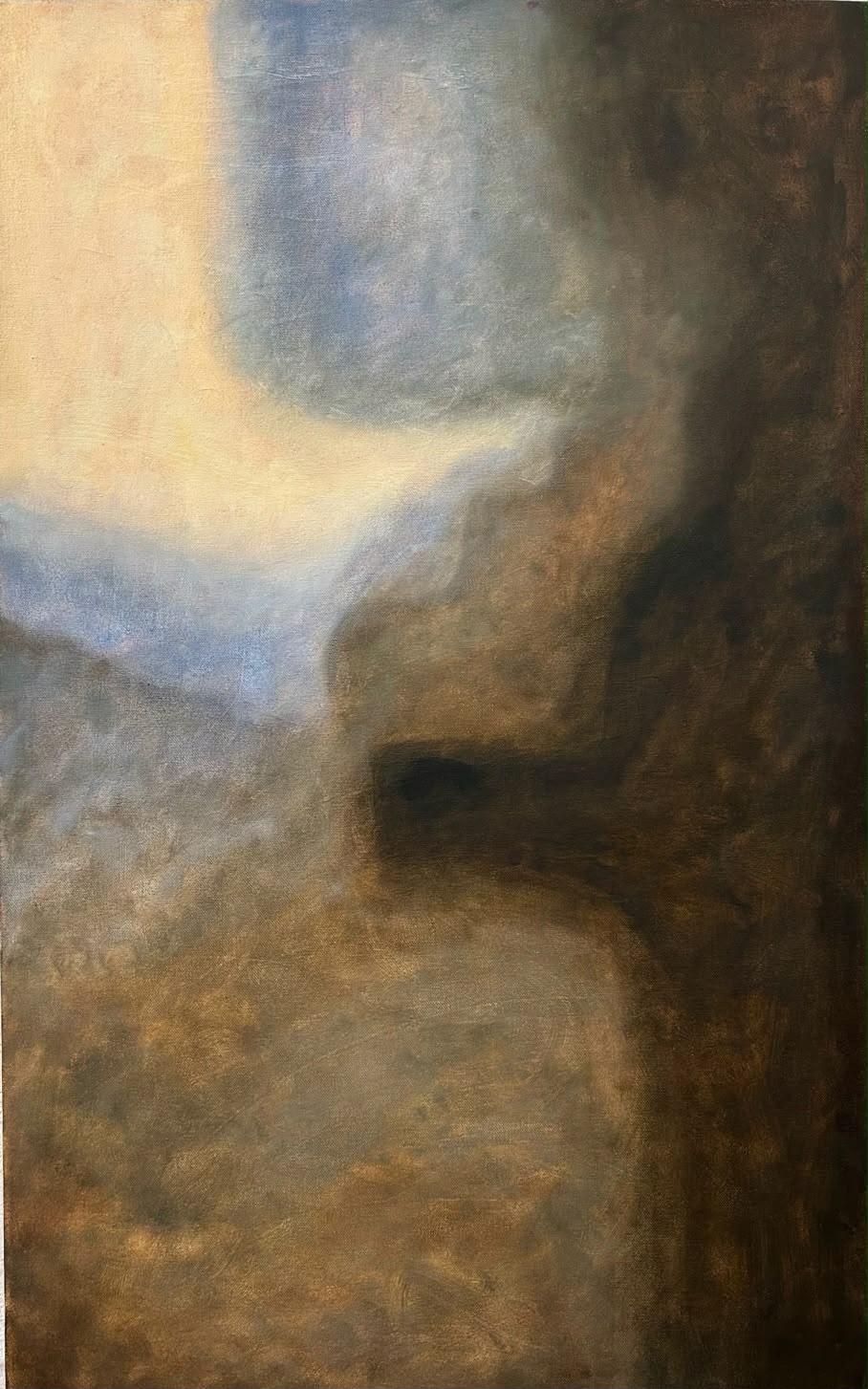


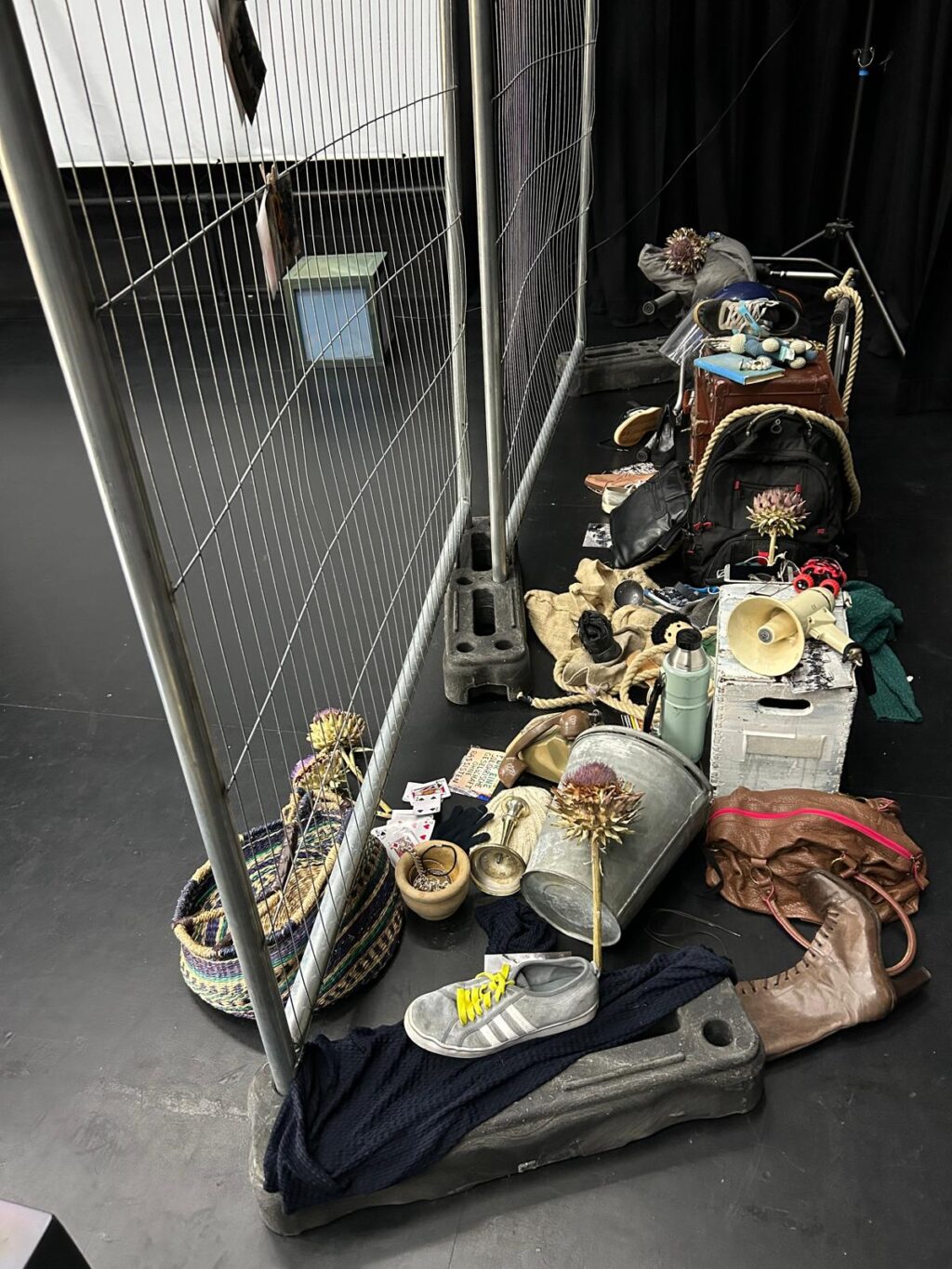
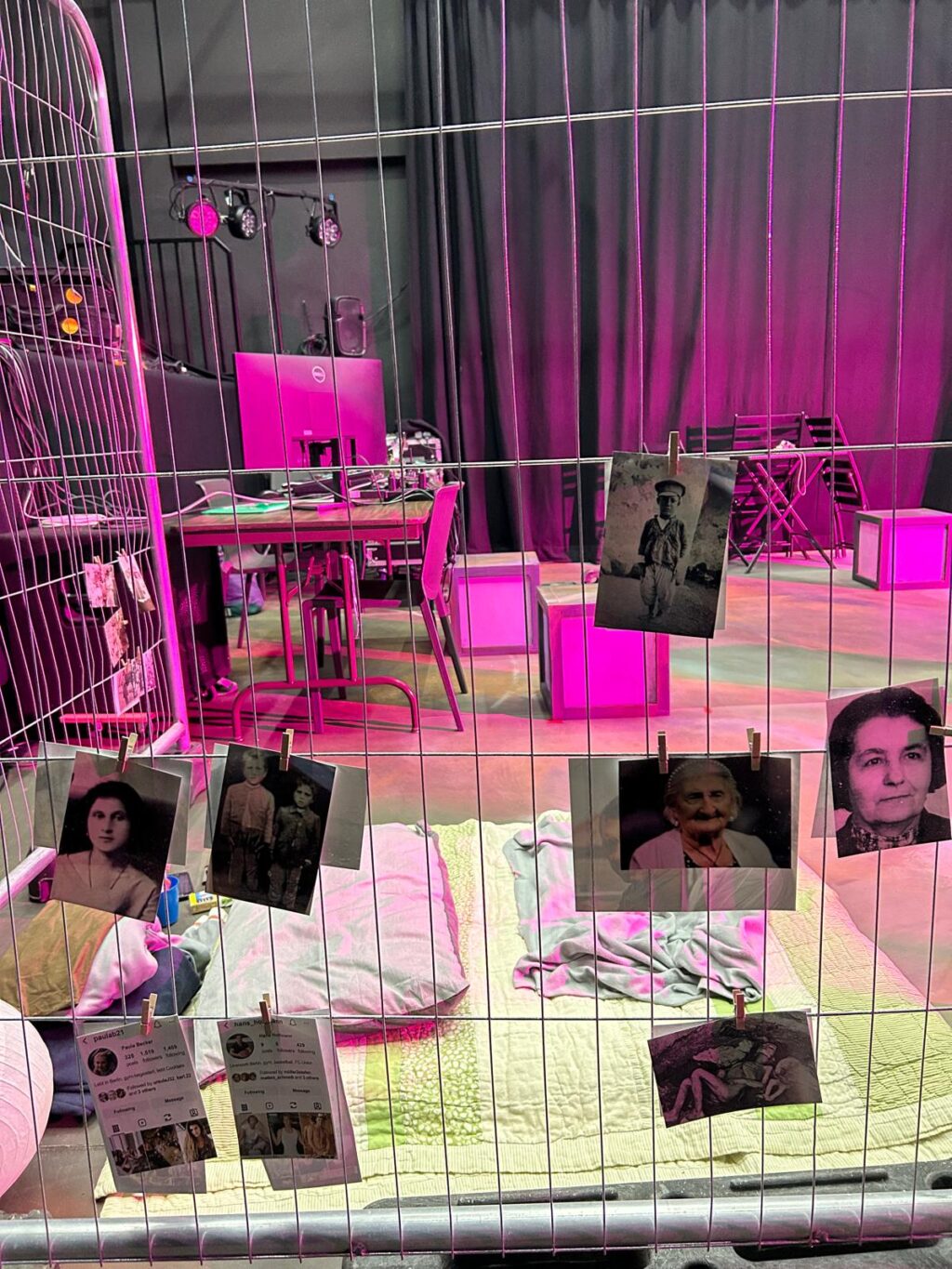
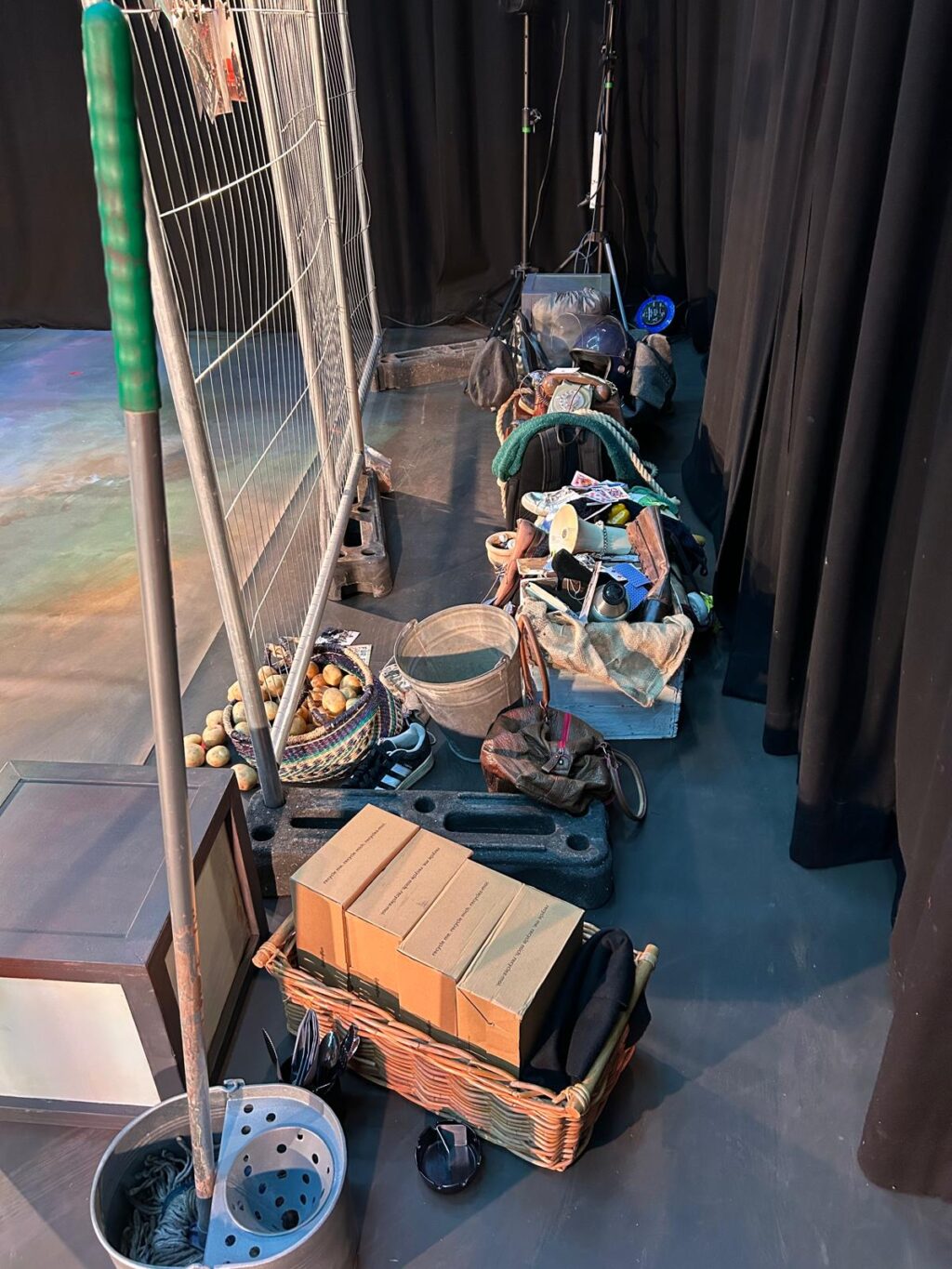
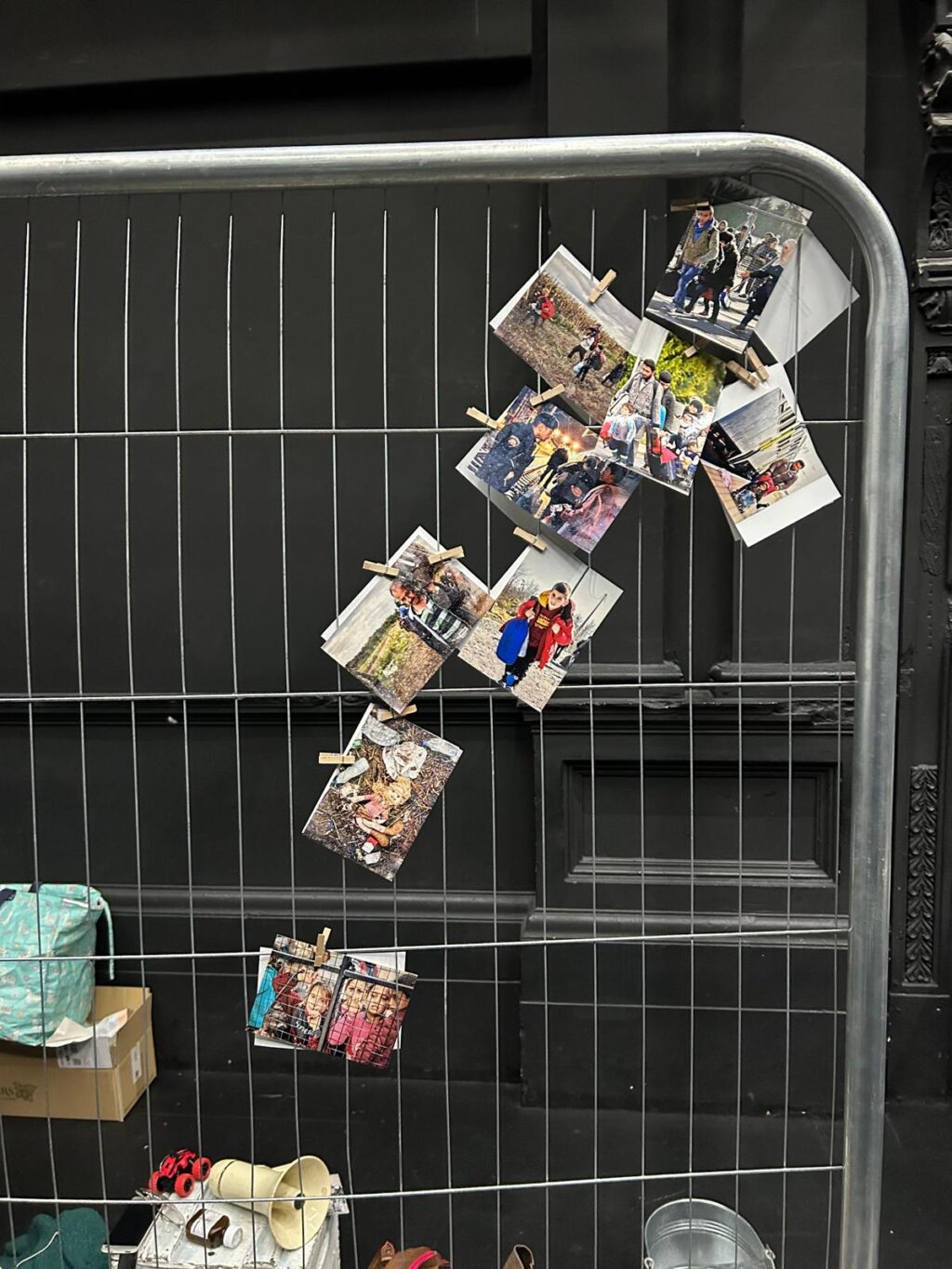
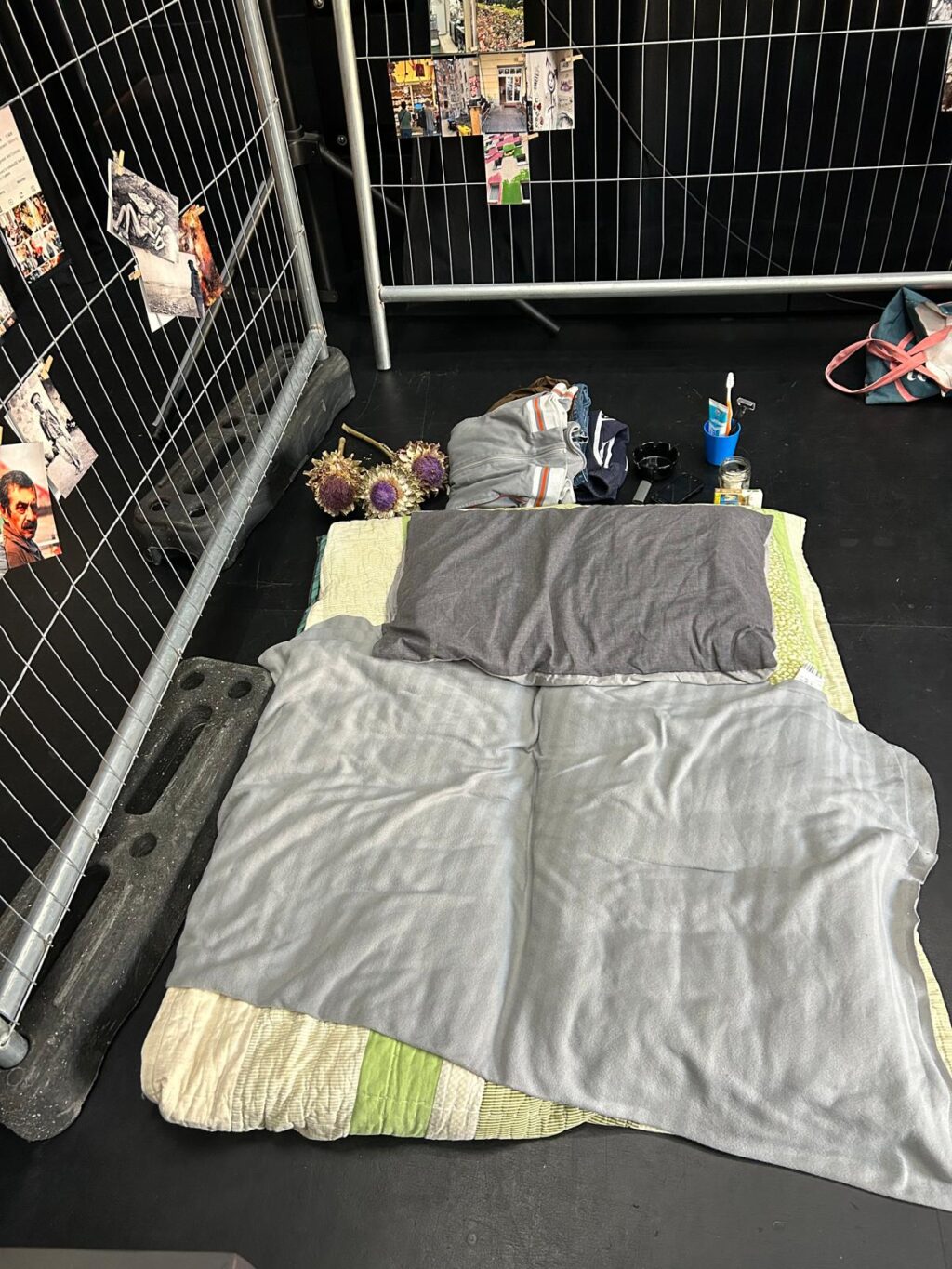
Owain Nicholls paints the huge floor cloth for Bones in the Desert – filling the entire Half Moon theatre.
This isn’t just a backdrop. Audiences will stand on it as the story unfolds around them.


Bones in the Desert is the product of writer Joe Nerssessian’s creative journey with Half Moon since 2021, culminating in his first professional and published commission. Our journey began, when I was then Half Moon’s Director, through a three-month development period as part of Narratives of Empathy and Resilience, a specific, time-bound programme within Half Moon’s Exchange for Change initiative.
Exchange for Change was established in 2004 with the aim to develop new professional work for young people and families through a co-creation process with target age-specific audiences. It seeks to create stories that reflect the UK’s diverse communities, while supporting the creative experiences of artists and participants with protected characteristics and those excluded from participating in the arts due to their socio-economic circumstances or background. While the initiative principally develops artists’ practice, importantly it brings greater representation into the theatre for young audiences (TYA) sector, and contributes to developing a more representative and resilient workforce. As a second-generation UK-based Armenian journalist who had recently completed a Masters in Creative Writing, Joe was very much welcomed to Narratives of Empathy and Resilience, becoming part of a collective of 18 artists drawn from a range of creative disciplines. With the majority of the participants having not previously created work for the TYA genre, a sense of new possibilities was clear, with everyone keen to explore something new. Working collaboratively, the artists created nine scratch performances for different age ranges, including Joe’s The Bench, aimed at audiences aged 8+.
The Bench grew from our initial conversations about ways to explore Joe’s heritage directly through the lens of the 1915 Armenian genocide and the death marches into the Syrian Desert inflicted upon ethnic Armenians by the then Ottoman Empire. The scratch play that emerged presented two generations: an old man who had experienced the events in 1915 and a young boy who lives nearby. The old man told the story to the child through a metaphysical connection created by the simple act of building a park bench together. While the piece was successful on many levels, Joe and I, felt this story and the themes it raised could be explored more radically and stylistically if the work was reframed for an older, teenage and young adult audience, making radical connections between contemporary forced migration and inherited trauma across generations.
What followed was a new series of R&D and co-creation sessions with young people drawn from Half Moon’s local schools and its own youth theatres. This process led to a new playtext, initially titled One Night of Freedom. For this new iteration, Joe still drew on the memories and experiences of the 1915 genocide and the wider historical context, speaking again to family members and elders in the Armenian community – who sadly have since died, but creating explicit connections with their descendants: those who undertook a reverse journey across the desert in 2010s through the experiences of Christian Armenian Syrians who were forced to flee sectarian violence by ISIS as a result of the Syrian civil war.
During the early stages of this new writing, Joe relocated to Berlin, and this geographical shift became a poignant influence on the setting chosen for the play which I strongly encouraged. The play became set in 2022, now told through the voice of 22 year-old Artur – a refugee of Christian Armenian Syrian heritage – who had fled to Germany and established a new life in Berlin. Supported by additional research, Joe beautifully and directly, through Artur’s story, has explored questions of identity, belonging, displacement and the psychological and biological impact of severe, unresolved stressful experiences that have been passed down from his ancestors – epigenetics. We experience Artur’s persistent anxiety and depression, like a form of PTSD; this angle, like many of the questions the play references, have resonated strongly with the young people for whom, and with whom, the piece has been developed throughout as part of the play’s dramaturgical and creative journey. And more widely, the playtext that has emerged unflinchingly addresses difficult historical and contemporary themes within a wider global context, giving the work a universal resonance in 2026.
Chris Elwell, September 2026



Bones in the Desert is the second Half Moon production to follow the Theatre Greenbook, a global initiative by theatre makers to create a more sustainable industry. We will be aiming for the Basic standard of sustainability, and so:
By helping to make theatre more sustainable, we hope to play an important role in fashioning a more sustainable world.
Thanks to the artists, creatives and organisations who were part of the research and development phases of Bones in the Desert.
Narratives of Empathy and Resilience Programme – The Bench: Michael Irving; Peter Losasso; Androulla Constantinou; Geoff Arthur; James Perry; Stephen Bailey; Chris Elwell; Samuel Baker; Callum Thomson; Jackie Eley; Esther Rennae Walker; David Lane; Jack, Ben and Alfie Banks; the late Khatchatur Pilikian; and the late Nerses Nerssessian.
Commissioning and Production Period – One Night of Freedom / Bones in the Desert: Mark Conway; Luca Kamleh-Chapman; Chris Elwell , John Omole, Kenneth Omole, Johnny Tomlinson, Sorcha Corcoran, Ron Nsubuga, Jonny Khan; the young people from Half Moon’s Orbit Youth Theatre; students and staff from schools in Tower Hamlets (Swanlea, Stepney All Saints, Morpeth, Langdon Park, Central Foundation Girls) who participated in the co-creation sessions as part of the Careers-in-Theatre programme; Roann Hassani-McCloskey; Layla Madanat; Misak and Jude at Hayashan, the Centre for Armenian Information and Advice, Acton; library staff at the Armenian Institute, London; the visual artists Manaf Halbouni and Léon Tutundjian, and the Hamburger Bahnhof Gallery of Contemporary Art, Berlin.
Have you got a memory you’d like to share? Or perhaps you have a programme or poster from one of our shows that we're currently missing? Then we want to hear from you! The website is a living archive and we will continue to add information as it comes to light.
Read More


